


Beyond the Bench: How Attorney Jacob Stipp Uses Cinematic Storytelling to Reframe Personal Injury Litigation
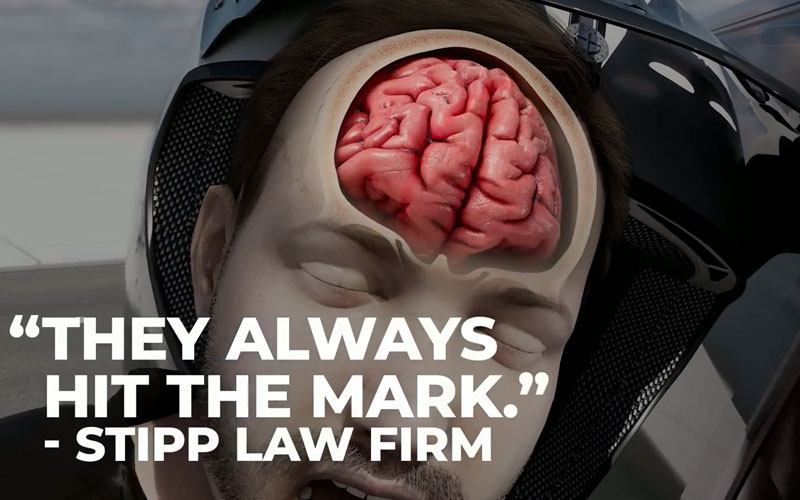
When you think of a typical courtroom trial, a standard image usually comes to mind. An attorney stands before a jury, holding up a stack of glossy police photos, gesturing toward a poster board, or delivering a carefully rehearsed opening statement. For decades, traditional litigation evidence has relied on these staple tools: official reports, expert testimonies, photographs, and eloquent speeches.
While these elements remain vital components of the legal process, they often fail to capture the full scope of a life-altering event.
A photo of a crushed bumper shows physical damage, but it doesn’t convey the split-second terror before impact. A medical bill quantifies economic loss, but it cannot reflect the daily struggle of a father who can no longer lift his daughter. At Stipp Law Firm, Attorney Jacob Stipp recognized this fundamental gap between traditional evidence and true human understanding. To bridge it, he took a step beyond conventional litigation—embracing his creativity to pioneer custom, professionally directed video visual recreations that bring his clients’ stories to life for judges and juries alike.
The Limits of Traditional Evidence
In personal injury and catastrophic harm cases, the burden of proof rests solely on the plaintiff. Attorneys must not only establish liability—who was negligent and caused the harm—but also demonstrate the depth of the damages suffered by the victim.
Traditionally, law firms approach this with three core assets:
- Photographic Evidence: Stills of the accident scene, vehicle wreckage, failed product, or physical injuries.
- Witness & Expert Testimony: Firsthand accounts from witnesses, along with expert testimony from accident reconstructionists and medical professionals.
- Attorney Framing: Oral arguments designed to persuade through rhetoric and logic.
While necessary, these traditional tools rely on a jury’s ability to extrapolate. Jurors are expected to take abstract data, cold numbers, and flat images, then reconstruct an intensely traumatic, dynamic event in their own minds.
However, human beings process trauma, motion, and emotion far better through narrative and visual immersion than through static reports. When left to rely on memory or imagination, jurors may inadvertently minimize the severity of an incident or miss crucial, split-second nuances that define negligence.
Jacob Stipp understood that to truly advocate for his clients and secure the justice they deserve, the courtroom needed a medium that matched how modern audiences perceive information.
The Power of Visual Storytelling in the Courtroom
We live in a visual culture. Modern juries are accustomed to dynamic, high-quality video content. Recognizing this shift, Jacob Stipp began integrating a distinct, resourceful approach into his litigation strategy: directing custom cinematic video recreations that vividly reconstruct the tragedy experienced by his clients.
This is not simply about producing an animated graphic or playing a basic video clip. It involves a creative, comprehensive directorial process tailored specifically to the facts of each individual case.
1. Reconstructing the Event with Precision
Using meticulous data from police reports, telematics, witness statements, and forensic analysis, Jacob directs realistic video recreations that walk jurors second-by-second through the event. By combining factual precision with compelling visual structure, these videos remove the guesswork from accident reconstruction. Jurors no longer have to guess what speed, angles, or sightlines looked like—they see the event unfold as it actually happened.
This even bodes well for cases pre-litigation resolution, as defendants, their counsel and their carriers see the animations for themselves, they second guess wanting to go the distance.
2. Translating Pain and Suffering Into Human Terms
One of the hardest elements to convey in personal injury law is non-economic damage—the daily pain, emotional distress, and loss of life quality. A medical chart might list a spinal injury as “L4-L5 disc herniation with nerve impingement.” To a juror, that sounds like clinical jargon.
Through carefully directed “day-in-the-life” video documentaries, Jacob captures the practical realities of living with that injury. By showing a client struggling through physical therapy, navigating daily household tasks with chronic pain, or facing the emotional toll of lost independence, the video transforms abstract legal terms into palpable human reality.
3. Creating an Immersive Juror Experience
When a jury watches a professionally structured video, their perspective shifts from passive listener to active observer. A well-crafted video reconstruction allows jurors to virtually step into the client’s shoes—experiencing the sightlines, the suddenness of the hazard, and the immediate aftermath of the tragedy. This visual resonance builds an authentic level of understanding that standard courtroom speeches simply cannot replicate.
Creativity as a Form of Resourceful Advocacy
Litigation is often viewed as a rigid, formulaic profession. However, true advocacy requires resourcefulness and creative problem-solving. Every client’s story is unique, and no two tragedies are identical.
Jacob Stipp’s willingness to go beyond traditional methods demonstrates a deeper commitment to his clients. By stepping into the role of a director for these critical video assets, he ensures that:
- No Detail Is Overshadowed: Complex technical details that might bore or confuse a jury when read from a transcript are transformed into engaging visual cues.
- The Client’s Voice Is Heard: Victims of severe trauma are often overwhelmed by the prospect of taking the stand to explain their worst moments. Video content allows their full story to be told thoroughly and respectfully, reducing unnecessary stress while preserving the integrity of their account.
- Settlement Strategy Is Strengthened: The impact of these videos extends far beyond the trial itself. During mediation and settlement negotiations, presenting insurance companies and defense counsel with a powerful video reconstruction demonstrates that Stipp Law Firm is fully prepared for trial. When opposing counsel sees how compelling the client’s story will appear to a jury, it frequently leads to fairer, faster settlement offers outside of court.
Bridging the Gap Between Law and Humanity
At its core, the legal system is meant to deliver justice for real people facing extraordinary hardships. Yet, the formal atmosphere of a courtroom can sometimes sanitize a tragedy, reducing a life-altering event to a case number and a series of technical exhibits.
By pairing rigorous legal preparation with creative, cinematic video storytelling, Attorney Jacob Stipp restores the human element to personal injury litigation. He ensures that when jurors enter the deliberation room, they aren’t just remembering legal arguments—they truly understand what the victim went through, the depth of what they lost, and the compensation required to make them whole.
At Stipp Law Firm, going the extra mile isn’t just a tagline; it is a creative, relentless pursuit of justice. By combining traditional legal expertise with innovative visual advocacy, Jacob Stipp and Stipp Law Firm continue to redefine what it means to effectively defend and represent their clients in modern litigation.